Why Resale Value Is the Hidden Math Behind a Real Investment Piece
An investment piece usually gets evaluated on cost-per-wear alone, dividing the price by how many times it’ll likely be worn. But that math leaves out resale value entirely, and two pieces at the same price and wear frequency can have very different real costs once one holds forty percent of its value on the resale market and the other holds almost none.

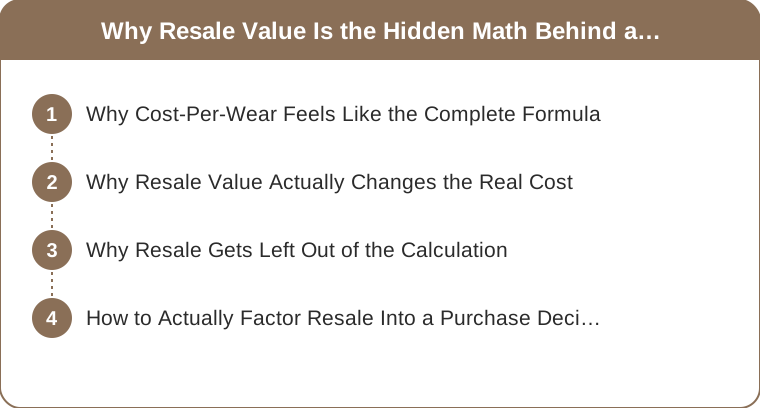
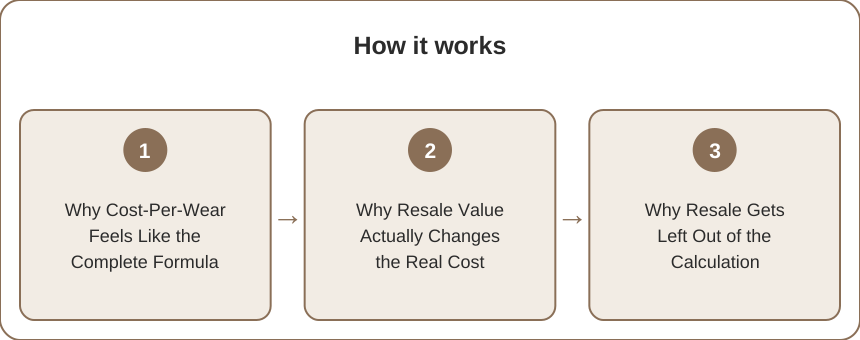
Why Cost-Per-Wear Feels Like the Complete Formula
The straightforward-math appeal: dividing a price tag by expected number of wears producing a single, easy-to-compare number, which makes cost-per-wear feel like a complete and sufficient way to judge whether something is worth the investment price.
Why Resale Value Actually Changes the Real Cost
The full-lifecycle math: certain brands, materials, and classic styles retaining significant resale value on the secondhand market, sometimes forty to sixty percent of the original price years later, while trend-driven or lower-demand pieces can be worth very little, meaning the true cost of ownership is the purchase price minus eventual resale value, not the purchase price alone.

Why Resale Gets Left Out of the Calculation
The overlap: resale value being harder to estimate at the time of purchase than cost-per-wear, since it depends on future demand and condition, which makes it easy to leave out of the math entirely even though it can swing the real cost of a piece dramatically.
How to Actually Factor Resale Into a Purchase Decision
The practical step: checking resale platforms for how similar pieces from the same brand and style have historically held their value before a major purchase, and weighting that alongside cost-per-wear rather than instead of it, and the frame (resale value can swing the true cost of a piece by forty percent or more — checking it before buying is what actually completes the investment math.)
An investment piece usually gets evaluated on cost-per-wear alone, dividing the price by expected number of wears. But certain brands and classic styles retain significant resale value, sometimes forty to sixty percent of the original price years later, while trend-driven pieces can be worth very little, meaning the true cost is purchase price minus eventual resale value, not the purchase price alone. Resale value is harder to estimate at the time of purchase than cost-per-wear, which makes it easy to leave out even though it can swing the real cost dramatically. Checking resale platforms for similar pieces before a major purchase is what actually completes the investment math.
Keep Reading
This article is for general styling and informational purposes only. Trends, sizing, availability and pricing may vary by brand and season.